What is the Bibliobox?
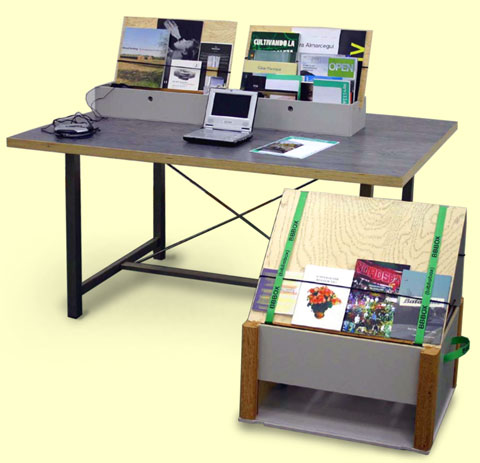
The Bibliobox is a travelling archive; it contains information
about art projects in the rural context and can be folded
out to reveal a small presentation. On invitation by
a local host, the box can travel to a village and be
opened out for presentations. Inside are films to be
watched, books to leaf through and CDs to listen to.
The programme of the presentation lies within the responsibility
of the host. The host may be a local artist, an art
institute, a farmer, the local fire department or a
village group.
What does the Bibliobox do?
In a rural context, the box offers a broader view of
people living in similar situations in other parts of
Europe. It presents an opportunity for people to share
experiences from art periphery to art periphery, also
through the website. The box informs on the diversity
of village life and art. It invites people to make their
own contribution to contemporary art. Inhabitants of
rural areas in the EU are being inundated with floods
of images at the moment, but are rarely considered a
potential audience for contemporary art. The Bibliobox
can change this outlook.
What’s inside the Bibliobox?
The present contents of the box were collected through
contacts during the Village Convention in Ditchling
(UK) 20-22 May 2005. The convention brought together
practitioners from different European countries and
was used to exchange and compare ideas about the production
of contextual art in the rural environment. All participants
are involved in arts projects that engage actively with
the context and the public, and the content of the Bibliobox
reflects that fact.
What does the box look like?
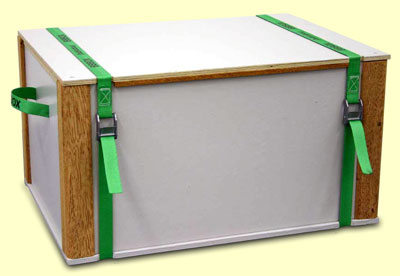
The crate was created by Wapke Feenstra, in collaboration
with a cabinet-maker. The box had to be practical and
simple, and is constructed from plywood. Bibliobox and
myvillages.org, are clearly marked on the outside; the
inside is painted and has sections that can be folded
out to construct a stand with a book display and DVD
player. The box also contains a photo collection of
previous trips. Electrical equipment and projectors
need to be organised locally. A new crate can be added
in the future, as the box expands on its travels and
adds to its collection.
Where does the Bibliobox go?
The Bibliobox travels to a village or rural location.
The box isn’t confined to journeys in Europe,
of course. New and unexpected invitations and offers
are more than welcome. All they have to do is cover
travel expenses and generate fresh material and ideas
for the box. Additional financial contributions to the
crate will help speed up the online archive and go towards
the construction of new bbboxes. Sponsorship also remains
a source of material for the box’s contents. To
keep transport costs to a minimum, the box can be transported
by standard means of transportation, weighs no more
than 25 kilos and is fitted with handles.
www.bibliobox.org
|